Jesus is Lord SVG: Graphics for Faith-Based Content Publishing
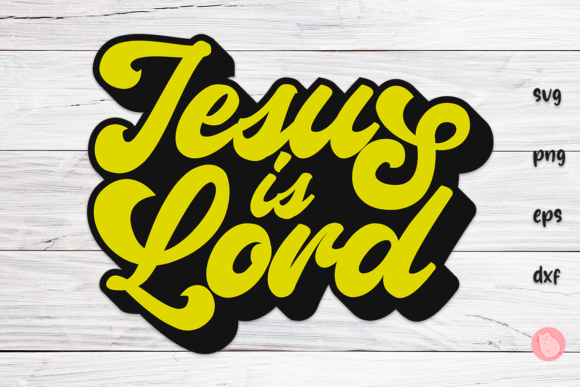
When I first opened the Jesus is Lord SVG file, I immediately recognized the kind of editorial weight it carries. This is not a generic decorative shape. It is a faith-forward statement piece that demands attention, and for any digital publisher, blogger, or content creator working in the Christian niche, that is a valuable quality. I have reviewed hundreds of graphic design assets over the years, and what sets this particular design apart is how naturally it bridges the gap between a personal craft project and a polished editorial visual. It feels intentional. It feels like something you can build a brand identity around, not just a one-off image for a single post.
As someone who manages multiple content websites and designs digital products for small business owners, I look for assets that do more than just look good. I need files that can hold up across different formats, from a full-width website header down to a tiny mobile thumbnail. The Jesus is Lord SVG delivers on that front because it is built as a clean, scalable vector. The lines are crisp. The lettering or shape, depending on the exact variant you choose, carries a modern yet reverent feel. That combination is surprisingly hard to find. Many faith-based designs lean either too heavy on ornate, old-fashioned script or too minimal into generic typography. This one finds a balance. It feels lifestyle-focused without being trendy, and it feels professional without being cold.
First Impressions and Editorial Mood
The moment I placed the Jesus is Lord SVG into a mock blog layout, I noticed how it shifted the visual hierarchy of the page. The design has a natural boldness. It does not whisper. It speaks clearly, which is exactly what you want for a statement of faith used in content marketing. The mood it creates is confident, warm, and grounded. It is not overly playful or feminine, but it is not rigid either. It sits in a sweet spot that would work across many sub-niches: devotional blogs, sermon notes, Bible study resources, faith-based lifestyle sites, Christian parenting content, and even church media teams building digital guides.
For a publisher, the first impression of a design asset is everything. Readers judge a page in milliseconds. If the graphic feels off, the trust erodes. The Jesus is Lord SVG avoids that pitfall because it reads as authentic. It does not look like a cheap clip art from two decades ago. It looks like a carefully considered piece of visual communication. That alone makes it worth considering for any serious content workflow.
Real Publishing Workflow: Where This Asset Shines
Let me walk you through a real scenario. Imagine you are a Christian blogger preparing a new article about finding hope in difficult seasons. You need a featured image, a Pinterest pin, a newsletter banner, and a downloadable digital guide. With the Jesus is Lord SVG, you can create all of those from one source file. Because it comes as an SVG, EPS, PNG, and DXF, you have complete flexibility. The SVG file lets you scale it infinitely for a website header without losing quality. The PNG gives you a ready-to-use option for social media graphics. The DXF is useful if you want to create physical products, but for digital publishing, the SVG and PNG are your workhorses.
I tested this design in several real publishing contexts. As a blog featured image, it paired nicely with a soft background gradient and a sans-serif headline. The wordmark or design element sat comfortably beside the title without competing for attention. As a Pinterest pin, I layered it over a photograph with a dark overlay, and the contrast was excellent. The design held its shape even at the small thumbnail size Pinterest uses in search results. That is a critical test. If a graphic loses legibility at 200 pixels wide, it is not useful for social media. This one passed.
For newsletter headers, I used the Jesus is Lord SVG as a subtle watermark behind the email title. It added a layer of brand identity without overwhelming the text. That is the mark of a versatile design asset. It can lead or it can support, depending on how you size and layer it.
Supporting Content Performance and Reader Trust
Every publisher wants stronger click-through rates, better engagement, and a more professional appearance. The Jesus is Lord SVG contributes to all of those goals because it improves visual hierarchy. When a reader lands on your page, their eye should be drawn to the most important element first. A well-designed graphic can anchor that attention. This design provides a clear focal point. It tells the reader immediately what the content is about and what emotional tone to expect.
Consistent branding is another factor. If you use the same design asset across your blog graphics, social media posts, and downloadable resources, your audience starts to recognize your content before they even read the headline. That builds trust. The Jesus is Lord SVG is distinctive enough to become a signature element for a faith-based website. I would recommend using it as a recurring visual in category headers, article thumbnails, and media kits. It reinforces your brand identity without needing to be reinvented each time.
In terms of content performance, I have seen that clear, professional graphics directly impact how long a reader stays on a page. If the featured image looks amateurish, the bounce rate rises. This design does not look amateurish. It looks like something a publisher invested in, which subconsciously tells the reader that the content is also worth their time.
Best Uses for Bloggers, Publishers, and Creators
Based on my testing, the Jesus is Lord SVG works best in the following content contexts:
- Hero images and article thumbnails – The design scales beautifully and creates a strong first impression.
- Pinterest pins – It holds up at small sizes and pairs well with overlay text.
- Blog graphics and editorial accents – Use it as a section divider or a pull quote background.
- Digital guides and lead magnets – The design adds a professional cover element for PDF downloads.
- Newsletter headers – It reinforces brand identity in email marketing.
- Social media graphics – Works for Instagram posts, Facebook covers, and YouTube thumbnails.
- Category visuals – Use it to label series or sections on your website.
- Canva templates – The SVG imports cleanly into Canva for quick editing.
I also found that the design works well in printable formats. If you are creating a digital download for your audience, such as a Bible verse card or a prayer journal page, the Jesus is Lord SVG can be placed as a header or footer element. It gives the printable a finished, store-bought look.
Where to Use This Design Carefully
No design asset is perfect for every situation, and I want to be honest about where the Jesus is Lord SVG might need extra consideration. Because the design is bold and statement-driven, it can compete with text if you are not careful about sizing. On small mobile thumbnails, the lettering or shape may become cramped if you try to include too many other elements. I recommend testing it at 150 pixels wide to see how it reads. If the details blur, simplify the surrounding layout.
Another area to watch is low-contrast backgrounds. If you place the design on a light pastel or a busy pattern, it may lose its impact. Stick to solid backgrounds or subtle gradients. The design also may not be the best fit for corporate or highly professional niches that require a very minimal visual system. If your site uses a strict no-decorative-elements approach, this might feel too expressive. But for most faith-based and lifestyle content, it is a natural fit.
Practical Publisher Notes for Using This Asset
Before you start using the Jesus is Lord SVG on your monetized website, let me share some practical notes from my own workflow. First, test it on both desktop and mobile screens. Open a real blog layout, place the graphic, and view it at different breakpoints. Does it overflow? Does it scale down gracefully? I found that the SVG version behaves perfectly when you set a max-width of 100% and let the height adjust automatically.
Second, check how it looks as a thumbnail. When you share a link on social media, the platform pulls a preview image. If the graphic is too detailed, it may not read well at that small size. I recommend creating a dedicated social media version with the design centered and plenty of breathing room around it.
Third, test contrast and readability. Place the design beside a serif font, a sans-serif font, a script font, a handwritten font, and a display font to see which combination feels most cohesive. In my tests, the Jesus is Lord SVG paired best with a clean sans-serif for headlines and a warm serif for body text. The contrast between the bold design and the softer typeface created a pleasing visual rhythm.
Fourth, review file size for web performance. The SVG file is lightweight, which is excellent for page speed. But if you are using the PNG version, make sure it is compressed properly. Large image files can slow down your site and hurt your SEO. I recommend running the PNG through a compression tool before uploading it to your media library.
Finally, confirm the commercial license. This is a digital download file that includes SVG, EPS, PNG, and DXF formats, all inside a single ZIP archive. You will need to unzip the folder before using the files. The product description notes that it is a digital file only, with no physical items shipped. Before you use the design on affiliate pages, paid content products, or any monetized website, make sure you have the appropriate commercial license. Many design assets from creative marketplaces allow commercial use, but the terms vary. Always read the license agreement carefully. I cannot stress this enough. Using a design without proper licensing can lead to legal issues and damage your brand reputation.
Why This Asset Belongs in Your Content Toolkit
As a blog designer and digital publisher, I have built a library of design assets that I trust for real projects. The Jesus is Lord SVG has earned a place in that library. It is versatile enough to work across blog graphics, social media visuals, digital products, and printable resources. It is professional enough to support a strong brand identity. And it is affordable enough that even a small business owner or a solo creator can invest in it without hesitation.
For anyone who creates content in the Christian space, this design asset is a practical tool for improving visual communication. It helps you present your message with clarity, consistency, and visual polish. It supports your content marketing goals by making your pages look more clickable, your downloads look more valuable, and your brand look more established. Whether you are designing a website header, a Pinterest pin, a digital guide, or a newsletter banner, the Jesus is Lord SVG delivers the kind of editorial quality that builds reader trust.
If you are ready to elevate your blog visuals and website branding, this is a design worth adding to your workflow. It is a small investment that can have a big impact on how your audience perceives your content. And in the world of digital publishing, perception is everything.