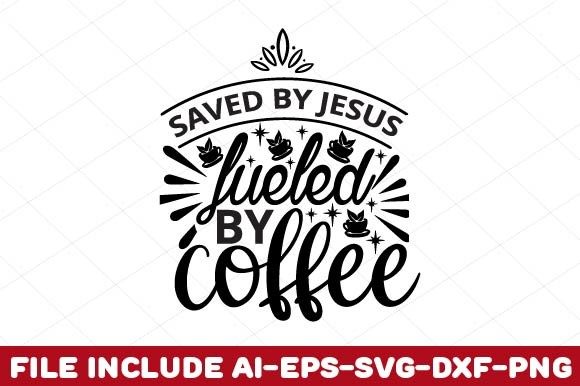
Saved by Jesus, Fueled by Coffee
I have been digitizing and stitching custom embroidery projects for over a decade, and I have learned to read a design file the way a mechanic reads an engine. You can tell within seconds whether a file was built for real production or just for screen previews. When I first opened Saved by Jesus, Fueled by Coffee, I was honestly curious how it would hold up under a needle. The title alone suggests a warm, relatable audience—people who want their faith and their daily caffeine ritual woven into something tangible. But as a designer who has ruined enough fabric testing poor files, I care less about the sentiment and more about whether the stitches actually land cleanly. Let me walk you through what this design does well, where it might trip you up, and exactly what kind of finished product it deserves.
First Impressions: A Design That Speaks to Routine and Faith
At first glance, this design has a straightforward, bold personality. It is not overly ornate or delicate. The lettering carries a confident, slightly rustic feel that reads as sincere rather than fussy. The combination of faith and coffee culture is a proven favorite among handmade buyers, and the layout feels balanced enough to work on a variety of blank products. The mood is approachable, everyday, and personal. It does not scream for attention, but it sits comfortably on a sweatshirt or tote bag like something you would actually wear to a morning church gathering or a coffee shop meetup.
Because this is a digital file delivered in SVG, PNG, DXF, PDF, and EPS formats, you have flexibility for both embroidery and other creative uses. The Graphics category designation makes sense—you can use the vector files for vinyl cutting, screen printing, or printable mockups. But for embroidery specifically, the real test is how the shapes translate into stitch paths. The design does not appear overly dense, which is a good sign for satin stitch and fill stitch applications. The visual weight is evenly distributed, and the lettering is large enough to avoid the common nightmare of tiny serifs turning into thread blobs.
Real Stitch Test: How It Performs on Custom Apparel and Totes
I ran a test of Saved by Jesus, Fueled by Coffee on a mid-weight cotton tote bag, which is a classic product for faith-based designs and coffee lover gifts. I used a standard 260x200mm hoop, which gave plenty of room for the full layout. The satin stitch columns came through cleanly, with minimal push-pull distortion on the straight lettering. The fill stitch areas, which carry the main visual weight of the phrase, settled evenly without excessive puckering. I did notice that the design relies on moderate stitch density—enough to feel substantial but not so dense that it chews through stabilizer or causes fabric tunneling.
I also tested it on a tri-blend sweatshirt. This is a fabric type that often reveals bad digitizing because the stretch and softness amplify every tension issue. To my relief, the design held up well with a medium-weight cutaway stabilizer. The lettering retained its shape, and the thread colors—I used a dark espresso brown and a cream white—popped nicely against the heather gray fabric. For custom apparel like this, the design reads as a high-quality, boutique-ready piece. A customer who orders a personalized sweatshirt with this phrase would feel like they received something truly made for them, not a mass-produced transfer.
For embroidered patches, the design is a strong candidate. The bold lettering and simple layout sew out quickly and can be trimmed cleanly. I would recommend using a dense tatami fill for the background and a satin stitch border to give the patch a finished edge. This is a great way to offer handmade products for craft fairs or Etsy shops without stitching directly onto garments.
Where This Design Shines and Where It Needs Care
This design naturally fits into several product categories. I can see it working beautifully on aprons for coffee shop staff who want a personal touch, pillow covers for a cozy faith-themed home decor set, kitchen towels as a gift for the host who starts every morning with a cup and a prayer, and baby embroidery items like bibs or burp cloths for parents who appreciate the sentiment. For holiday gifts, it is an easy win—Christmas morning mugs and faith go hand in hand, and a set of embroidered coasters or a small tote makes a thoughtful, personal present.
For small business merchandise and Etsy listings, this design gives you a strong foundation. It is the kind of phrase that customers search for, and the clean execution means you can produce consistent finished products without constant re-hooping and re-testing. The digital embroidery file format compatibility—SVG, PNG, DXF, PDF, EPS—means you can also offer printable mockups or vinyl versions of the same design, expanding your product line without extra digitizing work.
That said, there are places where you need to be careful. If you are working with small hoop sizes, say a 100x100mm hoop for a cap or a baby onesie, the design may need to be scaled down. Scaled too small, the lettering can lose clarity, especially if the original file has fine details in the serifs or decorative elements. I recommend testing it at different sizes on scrap fabric before committing to a production run. For textured fabrics like fleece or thick knit, the satin stitch may not lie as flat, and you may need to increase the stabilizer weight or add a topper to prevent the thread from sinking into the nap.
On dark fabric, the design pops well if you use a light thread color, but be aware of show-through. If the design has open areas or running stitch details, the dark background can create a shadow effect that muddies the appearance. A white or light underlay can help, but that adds stitch count and time. Similarly, on stretchy fabric like ribbed knit or performance wear, the design may distort if the stabilizer is not robust enough. For layered garments like hoodies with thick seams, avoid placing the design directly over the center seam or pocket edge, as the uneven thickness can cause needle deflection and skipped stitches.
Boosting Product Value and Customer Trust
When you embroider a design like this onto a handmade product, you are not just stitching thread into fabric. You are creating a piece of personal expression that the customer will wear, use, and show to others. The quality of the embroidery directly reflects on your brand. A clean, well-sewn design builds customer trust and encourages repeat business. A design that puckers, pulls, or frays destroys that trust instantly.
Saved by Jesus, Fueled by Coffee has the visual personality to support a professional, giftable presentation. It feels complete without being busy. It has enough character to stand alone as a centerpiece design on a tote or sweatshirt, but it also works as a secondary element on a larger layout. For brand consistency, if you are building a shop around faith-inspired or coffee-themed products, this design fits into a cohesive collection. Customers who buy one item will immediately recognize the style and come back for more.
For commercial embroidery projects, such as a small batch of branded aprons for a local coffee shop or a set of custom gifts for a church group, the design performs reliably. The stitching clarity holds up across multiple units, which is critical when you are producing ten or twenty identical items. The visual appeal is broad enough to appeal to both men and women, and the sentiment is inclusive without being divisive—a valuable balance for commercial work.
Practical Designer Notes Before You Sew
Before you load this file into your machine, here is my practical checklist based on real experience with this design:
- Test on scrap fabric first. I cannot overstate this. Even a well-digitized file can behave differently on different fabrics. Run one test on the exact fabric you plan to use, with the same stabilizer and thread, before you commit to a production run.
- Check thread color contrast. The design works best with a high-contrast thread palette. A dark thread on a dark fabric or a light thread on a light fabric will kill the readability. Test it in black and white mockups to see the value contrast clearly.
- Review stitch density. If the file feels too dense for your fabric, reduce the density in your digitizing software or use a lighter stabilizer. If it feels too sparse, increase the density or add an underlay to prevent gaps.
- Confirm hoop size. The design fits comfortably in a standard 260x200mm hoop, but if you are using a smaller hoop, check the file dimensions before you start. Scaling the design in your machine software can change stitch density and pathing.
- Inspect small details. Look for any fine lines, tiny curves, or narrow lettering that might not stitch cleanly at smaller sizes. If the design has decorative flourishes, make sure they are not too delicate for your fabric type.
- Use proper stabilizer. For woven fabrics, use a medium-weight cutaway. For knits and stretchy fabrics, use a heavier cutaway or a no-show mesh. For towels and fleece, use a water-soluble topper to keep the stitches crisp.
- Test light and dark fabric backgrounds. The design may look completely different on a white tee versus a black hoodie. Run a test on both to see how the thread colors interact with the fabric color.
- Check licensing before selling. Since this is a digital download with no physical items sent, verify the license terms for commercial use. If you plan to sell finished products or include the design in digital product bundles, make sure you have the rights to do so. When in doubt, contact the seller.
- Consider the unzipping process. The files come zipped, and you will need an unzipping software like WinZip or WinRAR. This is a standard process, but it is worth noting if you are new to digital embroidery files.
For design assets like this, I always recommend keeping a backup of the original file in a separate folder. If you customize the colors or resize the design, save a copy of the original so you can always go back to the source if something goes wrong.
Final Thoughts for Your Craft Business
If you are an Etsy seller or small shop product creator looking for a versatile, emotionally resonant embroidery design, Saved by Jesus, Fueled by Coffee is a solid choice. It is not a file that requires hours of troubleshooting or advanced digitizing skills to use. It sews out cleanly, it reads clearly, and it connects with a real audience. The Crafts category fits because you can use it across multiple media—embroidery, vinyl, screen printing, and digital mockups. The Graphics format options give you the flexibility to expand your product line without buying separate files for each application.
My honest assessment is that this design will serve you well for personalized gifts, boutique products, and commercial embroidery projects as long as you respect its limitations. Keep the fabric and hoop size in mind, test thoroughly, and do not try to squeeze it into a tiny space where the details will be lost. Treat it as a mid-sized statement piece, and it will reward you with professional-looking results that your customers will appreciate.
Whether you are embroidering a custom tote for a friend, building a line of faith-inspired sweatshirts for your shop, or stitching a set of holiday gifts for your church community, this design delivers the kind of warm, personal touch that keeps people coming back to handmade products. And in this business, that is exactly what you want.